


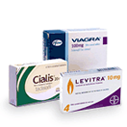



Texas Chemist – Number One Men’s Health Online Service
Texas Chemist is an online pharmacy of wholesale/retail trade of medications, medical supplements and other health-related products. Our company actively participates in providing customers with promotions and discounts. We service customers from all over the world. In recent years, the company has reached a high level in the wholesale and retail sale of medications thanks to great efforts, ability to work, activity and team cohesion.
Why our customers rely on Texas Chemist?
- Low prices. Every customer will find some of the lowest prices for medications. You can find out the cost of goods directly on our website.
- Huge range. You will find over 300 items. We specialize in men’s health products. Every men will get acquainted with products arranged above.
- Free online catalog. In the catalog on our website you will always find information about the price and availability of goods. In addition, you can read detailed instructions for their use in the product cards.
- Convenient working hours. Texas Chemist Online accepts orders 24/7 round the clock. The orders are processed within 24 hours maximum. At the moment the order is dispensed from our office you will get an email notification.
- Qualification of employees. Only experienced pharmacists work in our online store. Our specialists are always ready to hold an online consultation.
- Quality generic products. All deliveries are carried out directly from manufacturers and large pharmaceutical distributors, whose level is confirmed by relevant licenses. Only products that have passed pre-sale control for compliance with standards enter our online pharmacy.
The motto
Trust Pharmacy- a guarantee of quality and reliability. We cooperate with laboratories, whose employees check drugs and substances for their quality.
Back in 2009, the pharmacy automation process was launched. Today, the company has the ability to monitor the work of the pharmacy in real time, which has significantly reduced costs, expanded the range in pharmacies.
In 2013, it was possible to renew the transportation and acquire new special vehicles for the delivery of medications.
Quality control
Safety is the foundation of health. Therefore, in our pharmacy, close attention is paid to the quality control of drugs and compliance with appropriate storage conditions. Our pharmacy is equipped at the highest level, we work only with trusted and certified suppliers, we strictly control the expiration dates, storage conditions, transportation and dispensing of medications.
Men’s health products
Our company specializes in men’s health products. The list of bestsellers is arranged above for comfort of our customers. Our customers are capable to search for medications using different means like sidebar, searching field, and etc. Use one of the means and buy drugs. Let’s get acquainted with what is men’s health problems.
The main men’s health problems are erectile dysfunction and premature ejaculation.
Erectile dysfunction is the inability to achieve or maintain an erection necessary for sexual intercourse. Most cases of erectile dysfunction are associated with vascular, neurological, psychological or hormonal disorders. Some medications may also be the cause of this disease. The diagnosis usually includes screening for potential causes and measuring testosterone levels. Treatment options include therapy with oral phosphodiesterase inhibitors, intraurethral or intracavernous administration of prostaglandins, the use of vacuum pump devices, and surgical implants.
Premature ejaculation is a condition characterized by the rapid completion of sexual intercourse as a result of sperm release. In this case, ejaculation occurs on the background of minimal stimulation of the penis: the criterion for the disorder is the release of sperm 2 minutes after the onset of intercourse or after 6-8 frictions. All functions of the penis, including erection, are not changed. Abnormally rapid ejaculation is the most common sexual disorder among men under 40. Sometimes this physiological peculiarity does not cause anxiety and suits both partners, however, in most cases, premature ejaculation causes a breakdown in relationships.
Why we sell generics?
There are original drugs and there are analogs – they are known as generics. They have the same active substance as the brand-name, but they are much cheaper. Why generics are cheaper?
The manufacturer of the branded drug prices all its costs, including the costs of clinical trials that is very expensive. Generic appears when the patent for the branded drug expires. In different countries, it lasts from 5 to 25 years. At that time only the manufacturer who developed the medication and patented has the right to release it. When the patent expires, any other pharmaceutical company can do this – under a different name. Generic manufacturers did not spend on development, so a generic is always cheaper. By the way, in order not to miss the benefit, in recent years, pharmaceutical manufacturers of original drugs began to produce generics, as well.
Disclaimer
- Feistweiller.org is exclusively informational and fact-finding.
- The appearance of the goods and prices presented on the site may differ from those presented in drugstores.
- Published content is not a public offer.
- Any information on goods and services can be updated on the site with some lag from real time.
- Updating any information on the site is made without notice to users.
- Remote sale of medications is approved by the current legislation.
- By making orders on the website, you consent to the processing of personal data in accordance with the federal law.